The judge positions in detail.
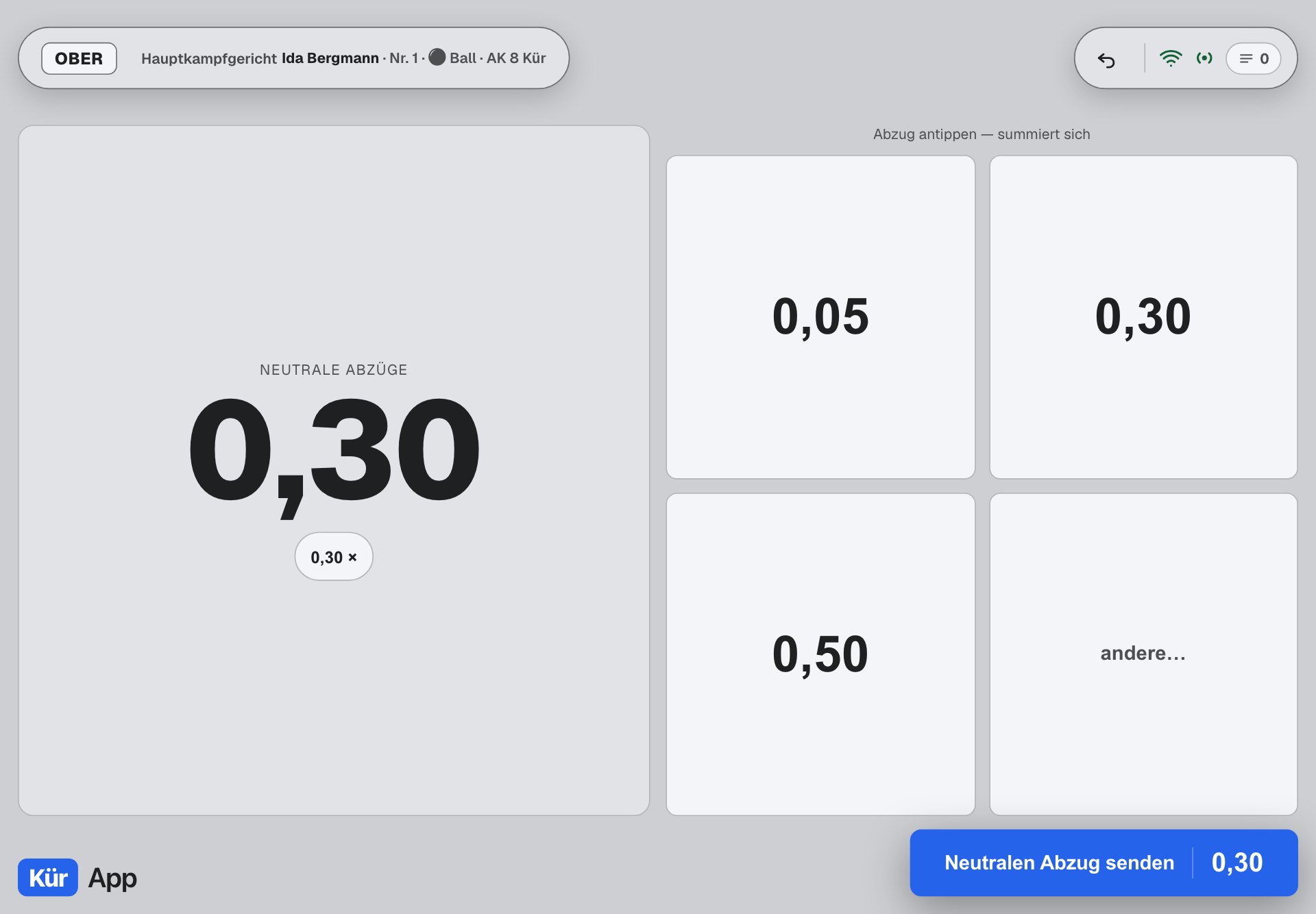
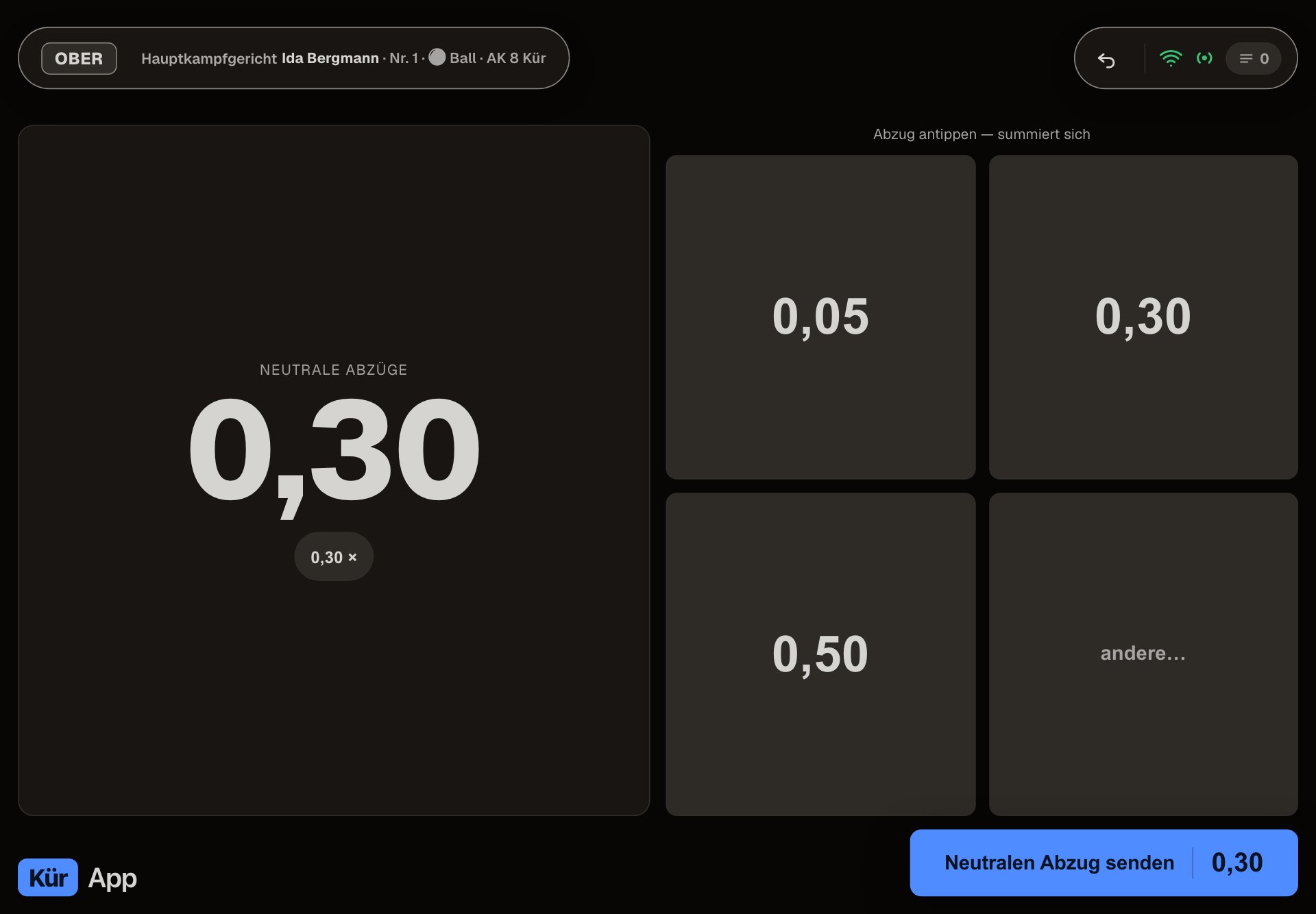
Every position on the judges' panel gets a tablet with exactly its task — judging works like on the familiar paper, just without slips, mental arithmetic or transcription errors. Drag the slider on the images to see each view in light and dark.
A judges' panel consists of the difficulty positions DB and DA, the artistry and execution positions (A and E — two of each by default, the number is adjustable) and the superior jury. The apparatus score is calculated automatically from all entries: body difficulty + apparatus difficulty + A score + E score, minus the neutral deductions. Each tablet signs in at its position with a QR code — if one fails, competition management issues a new QR code with one click, which the replacement device simply scans.
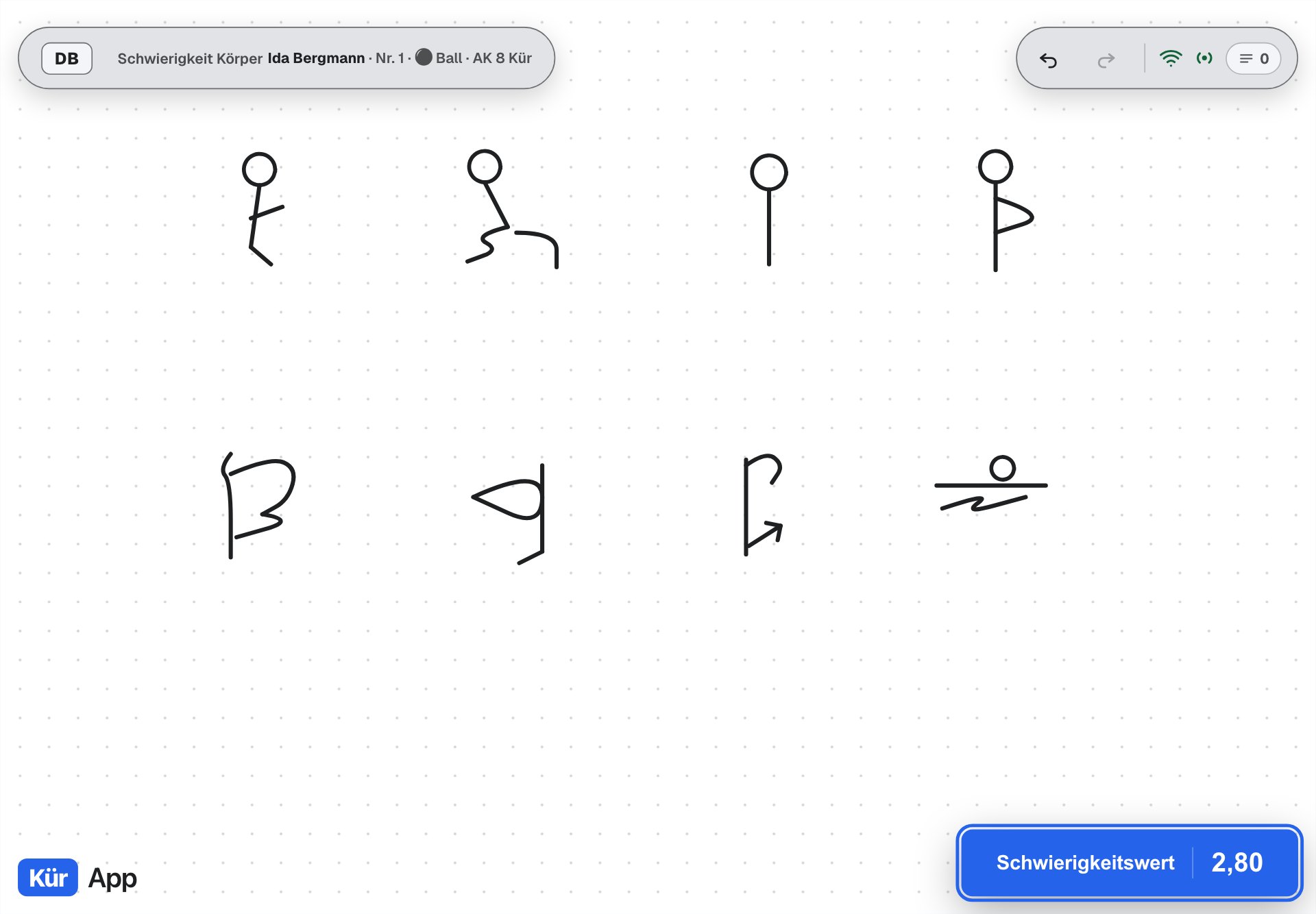
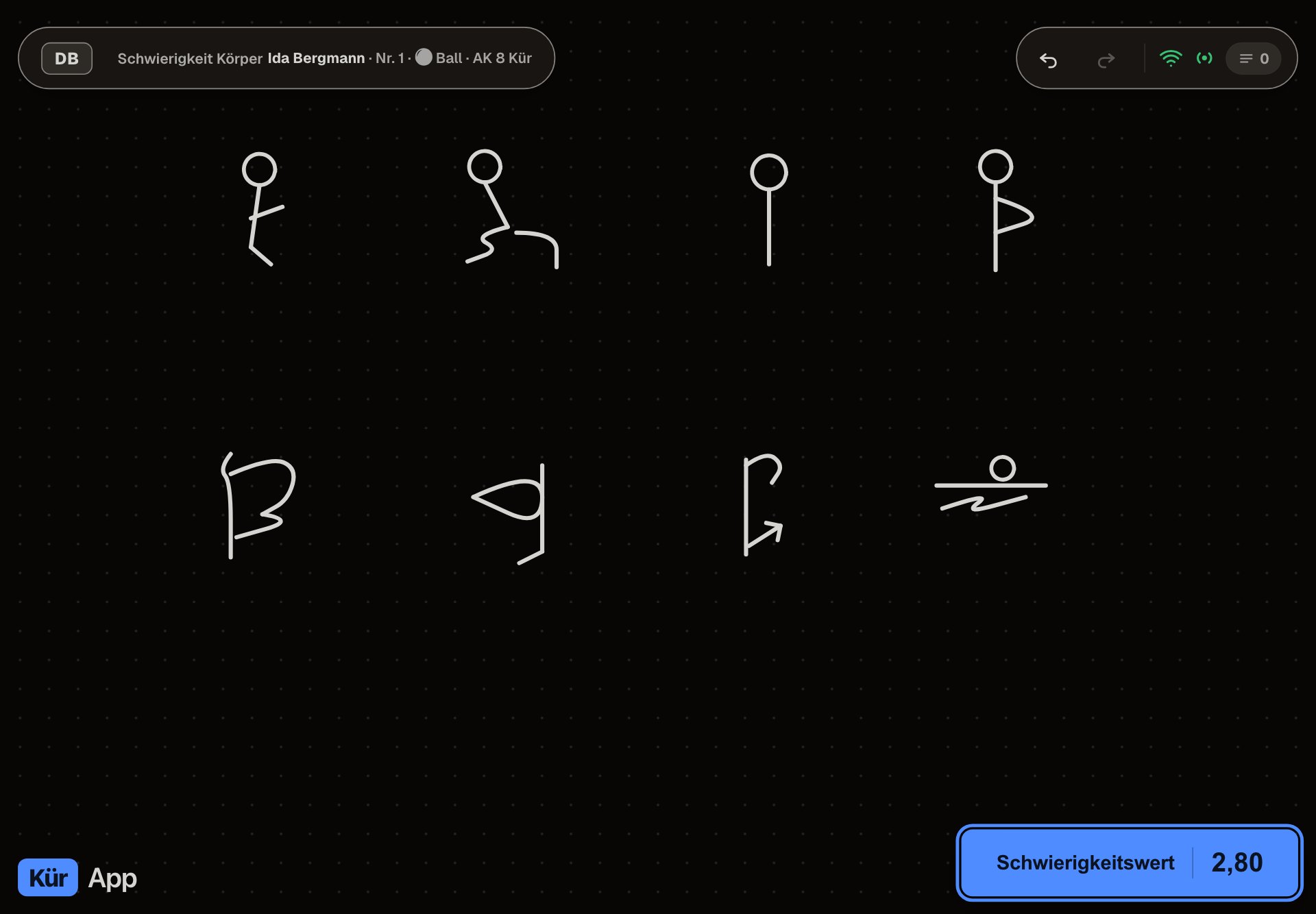
Body difficulty (DB)
Note body difficulties as on paper and type in the difficulty value. The value goes straight into the apparatus score; the notation is kept and can be viewed by competition management. No more retyping after the round.
- Familiar pen notation, undoable stroke by stroke
- No retyping, no transcription errors
- For queries: every notation can be viewed later
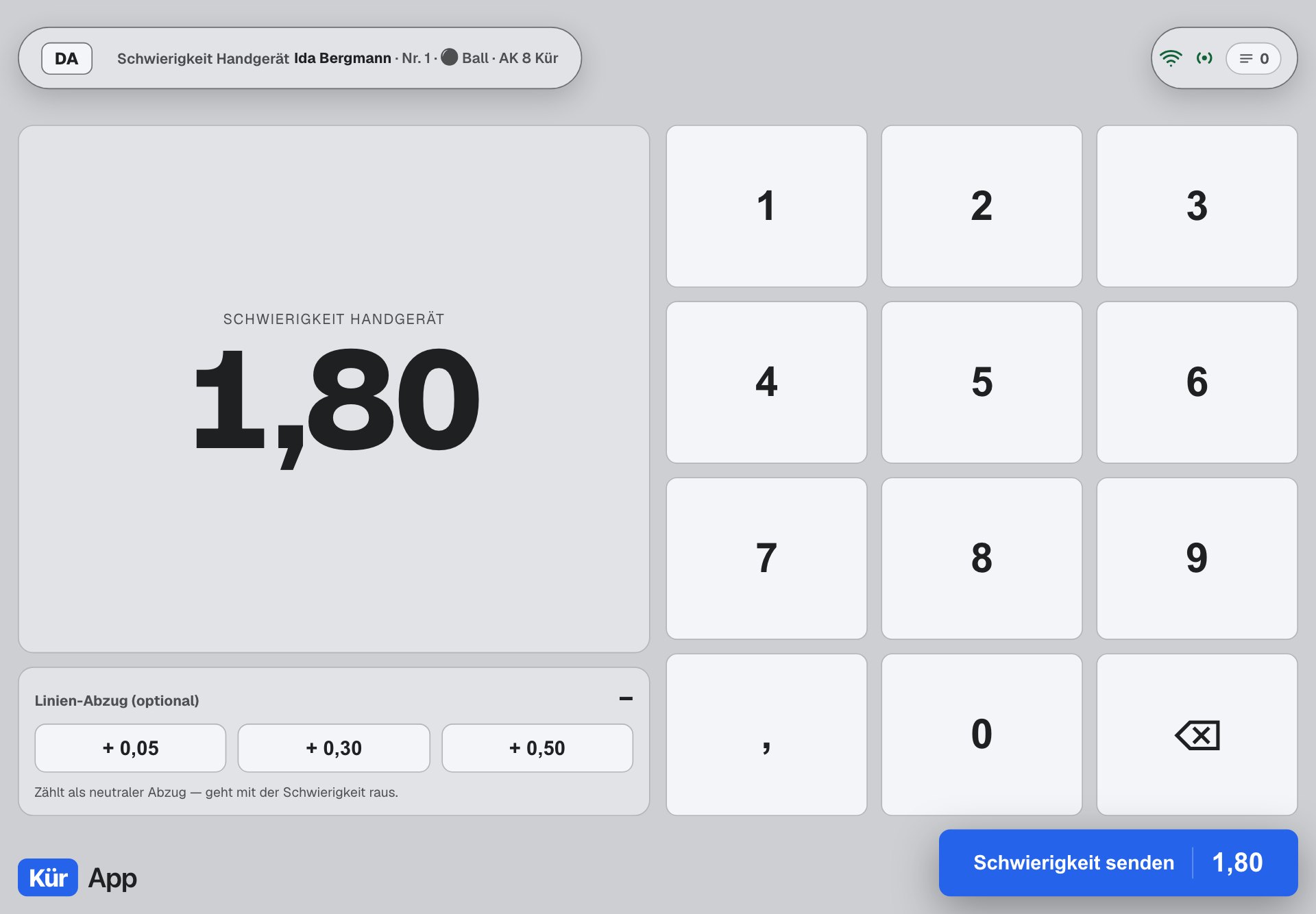
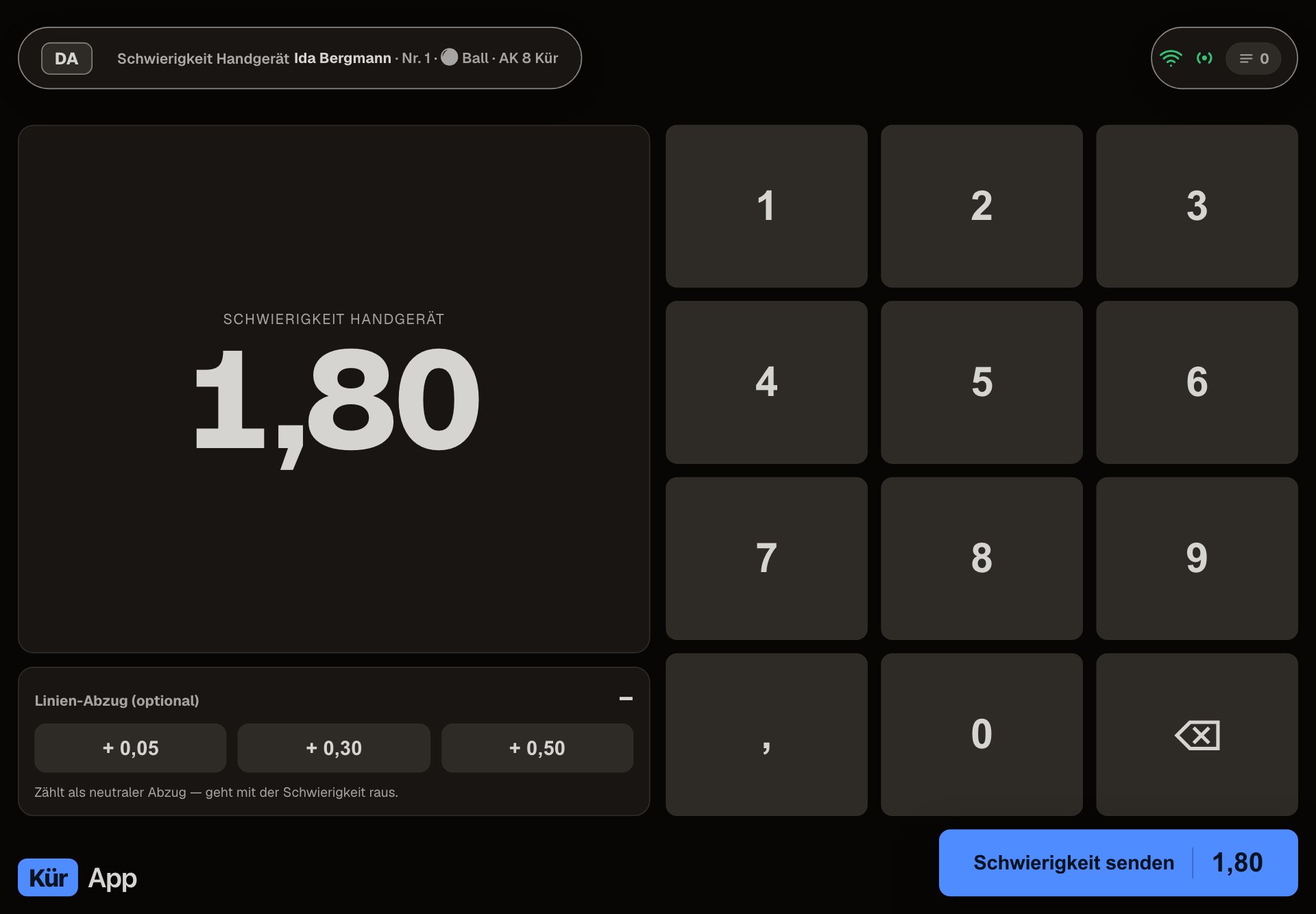
Apparatus difficulty (DA)
The apparatus difficulty is entered on a large number pad, a line crossing (0.05 / 0.30 / 0.50) right along with it. Both go to the right place in the score in one step.
- One value, one send button — the button names both
- Line deduction optional, removed again with one tap
- For categories without hand apparatus the position is dropped automatically
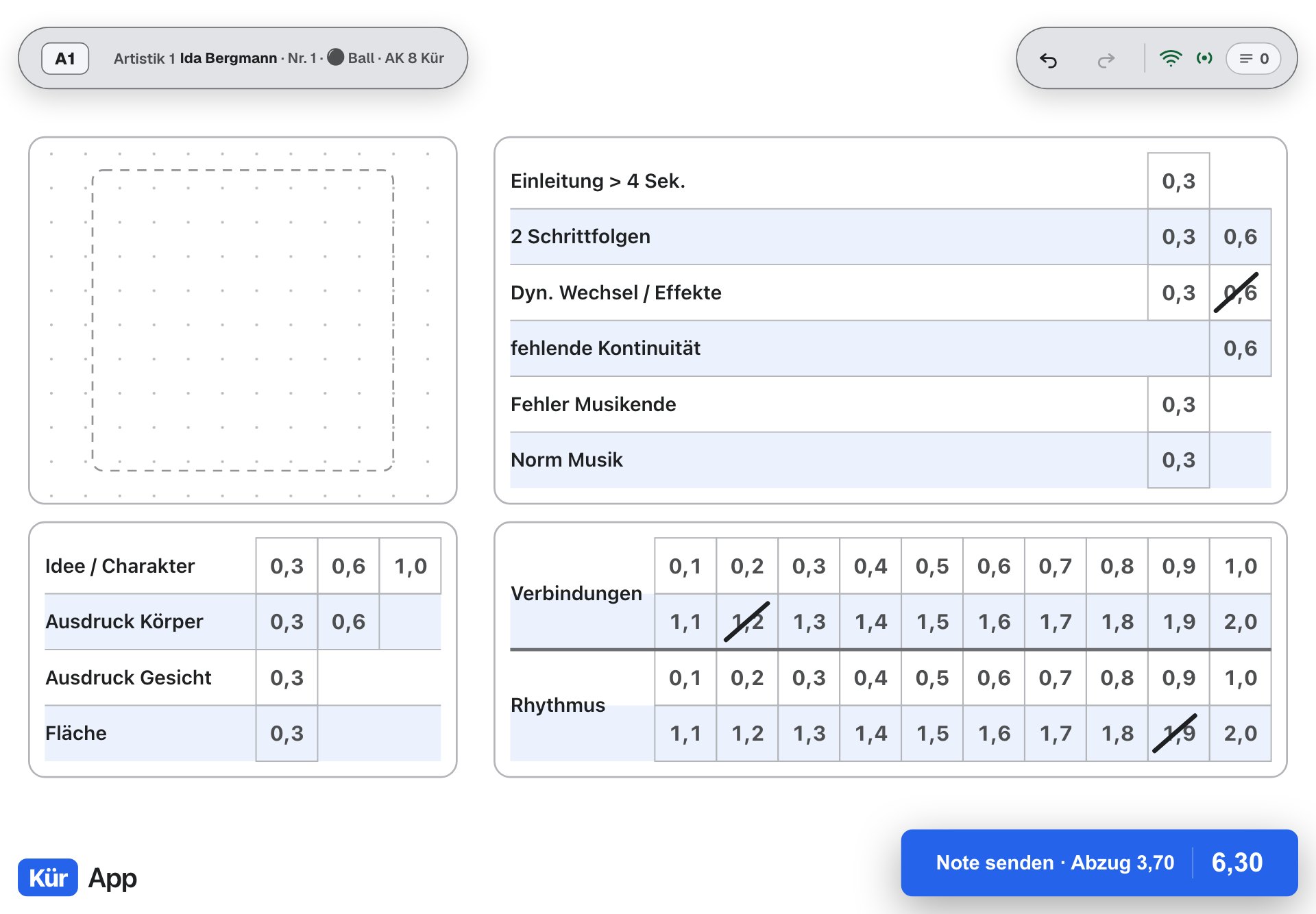
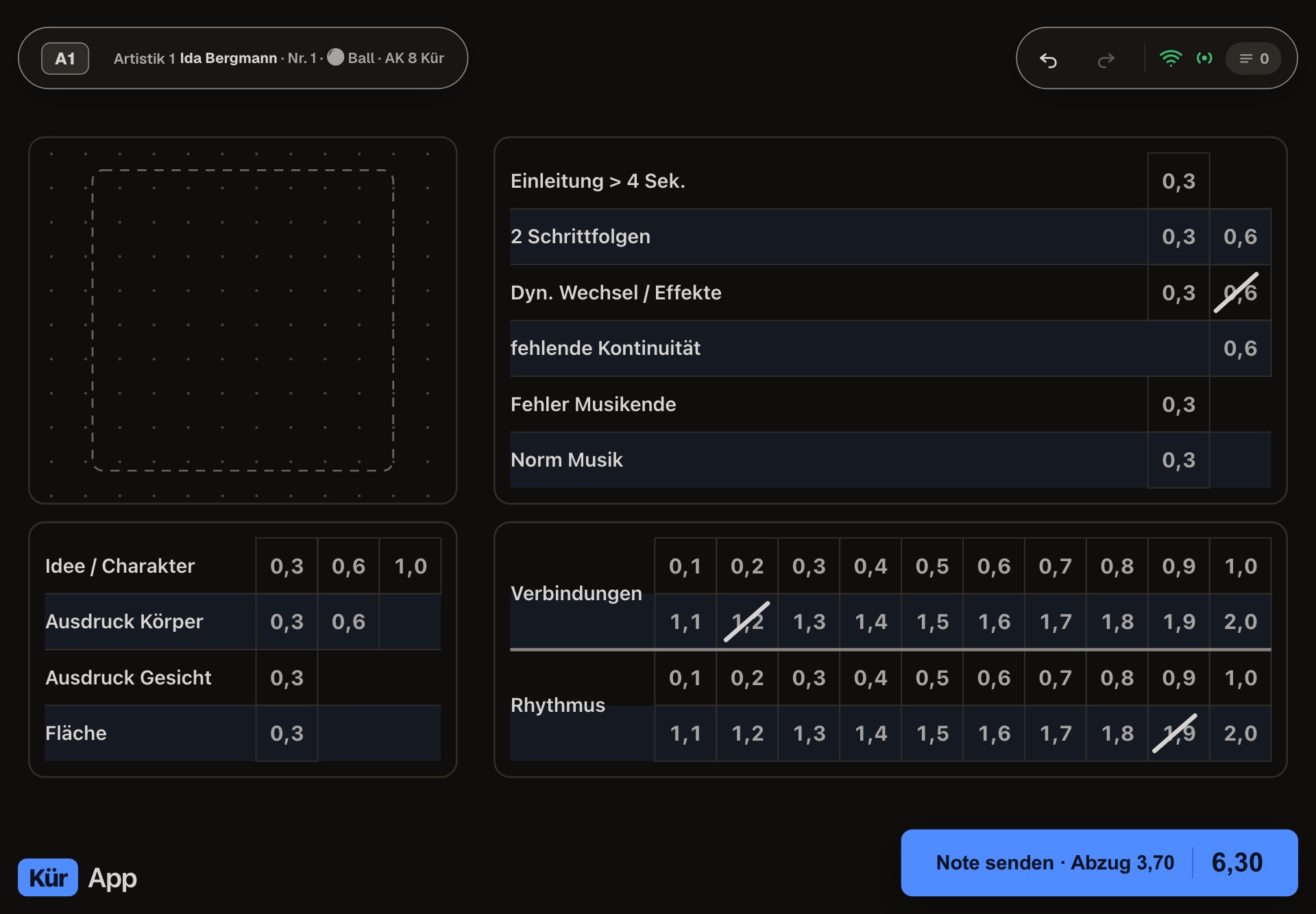
Artistry (A)
Deductions are ticked on the familiar artistry sheet; one tap sets the mark, a second removes it. Sum and A score are calculated automatically. Next to it is a free area for marks on the floor.
- One tap ticks the box — the mark sits like on the paper sheet
- Nobody recalculates at the table, nobody collects sheets
- Every mark remains traceable for queries
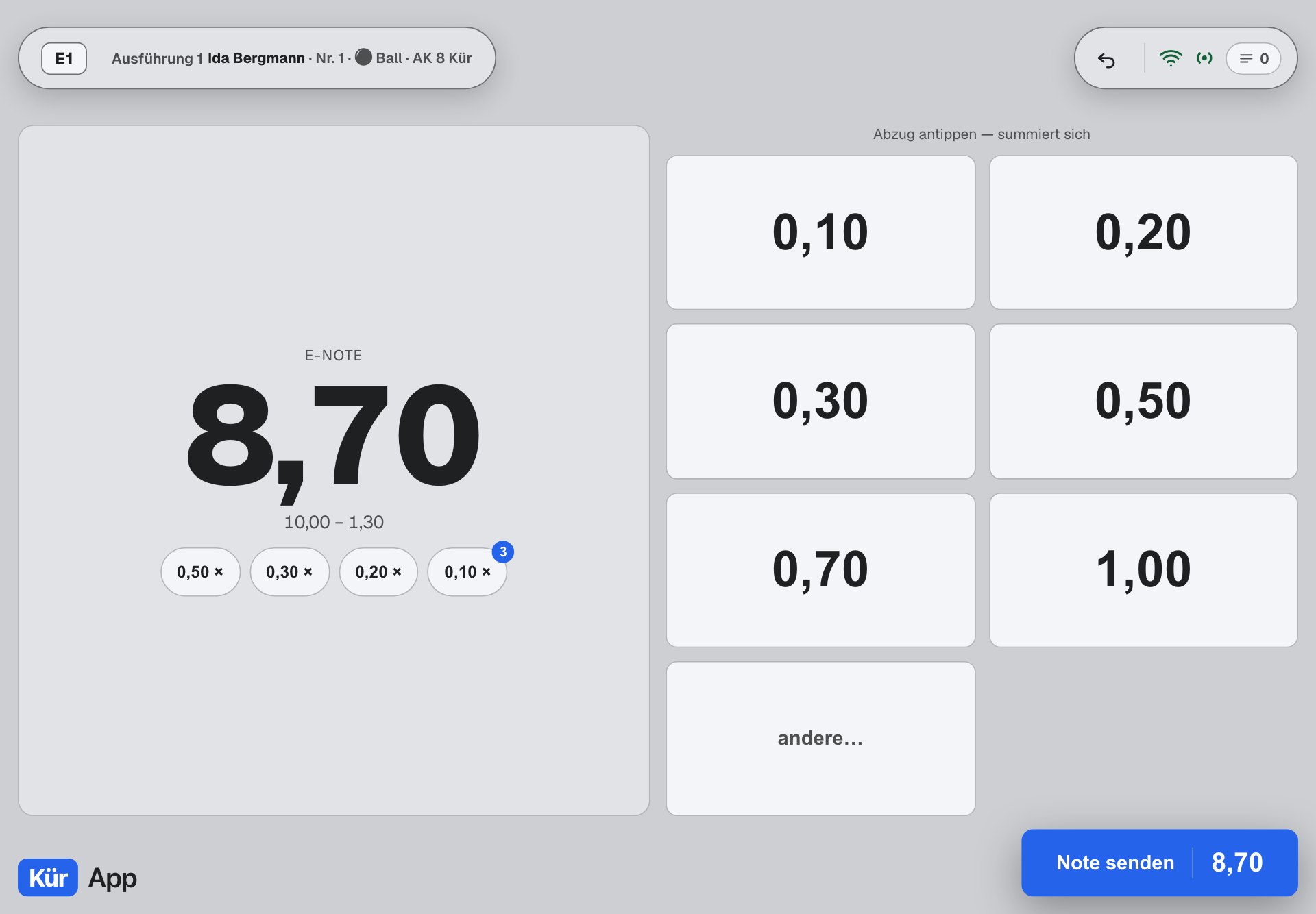
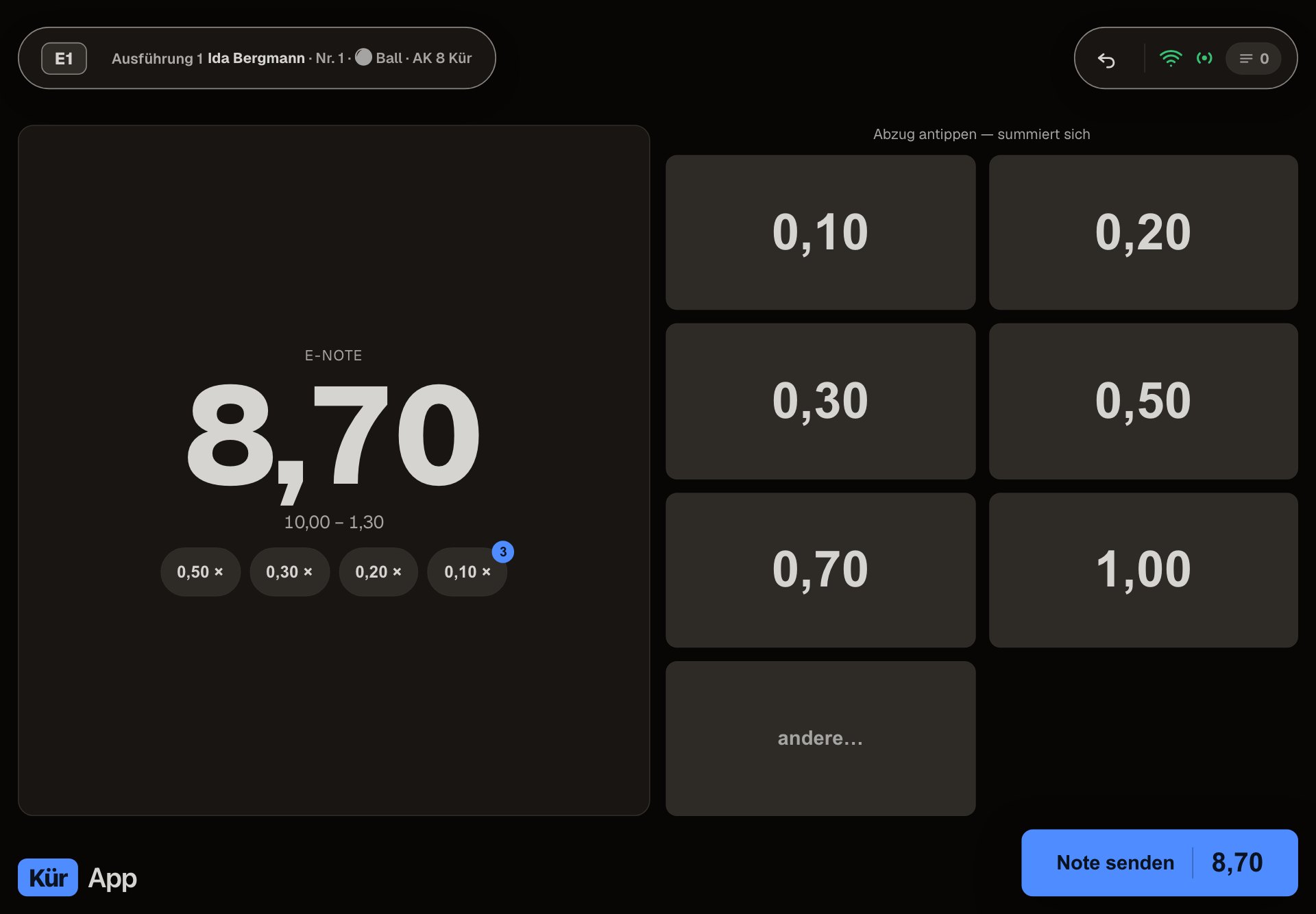
Execution (E)
Deductions are tapped as large chips during the routine without taking your eyes off the floor. Equal deductions are grouped with a counter, a mistap is undone immediately. The score grows with it; sending takes one tap.
- Large touch targets instead of small form fields
- Stacked chips instead of long lists: the overview stays
- The score is there immediately, without arithmetic and without slips
Superior jury
The superior jury also records neutral deductions such as line or time with chips. Live control shows which judge position has submitted; release is reported only once the score is complete.
- Neutral deductions kept cleanly separate from the judges' scores
- Every entry is kept in the scoring history
- Corrections never overwrite — the history stays complete
The same at every position.
- Offline-safe: every entry is saved on the tablet first and then sent — a dropped connection never blocks and never loses anything.
- Tolerance check: if two scores of the same type differ too much, Kür reports them as disputed back to both tablets — outliers show up immediately, not at the awards ceremony.
- Traceable: competition management can view every score down to the individual entry — including sheet and drawing.